

The Regulated Healer: Trauma Informed Foundations For Practice
Learn to work with the nervous system -
Ethically, Confidently, and with Embodied Presence.
Trauma shows up in bodywork more often than we’re taught to recognize.
This in-person, experiential ethics course supports massage therapists, bodyworkers, and healers in learning how to meet trauma responses with clarity, safety, and ethical confidence — without burning out or overextending themselves.
8 NCBTMB-Approved Ethics CE Hours | In Person
March 22nd, 2026 | 9-5pm | Spokane, WA
Course Overview
Trauma is not something that only appears in therapy rooms — it often shows up quietly on the massage table, through the nervous system, the breath, or the body’s protective responses.
As massage therapists and bodyworkers, we are already working with trauma physiology — whether we have the language for it or not.
This 8-hour, in-person ethics course offers a grounded, embodied understanding of trauma and the nervous system, and how to apply trauma-informed principles ethically and practically within massage therapy sessions.
Rather than focusing solely on rules or compliance, this course emphasizes relational ethics, nervous system awareness, and presence — supporting both client safety and practitioner sustainability.
What You’ll Learn
By the end of this 8-hour course, you will be able to:Define trauma and understand its effects on the nervous system and bodyRecognize trauma responses that may arise during massage sessionsApply trauma-informed principles directly to bodywork and touchCreate a safe, supportive therapeutic environment for trauma survivorsRespond ethically and appropriately when trauma responses occurStrengthen consent, boundaries, and ethical decision-makingDevelop self-care strategies to reduce burnout and compassion fatigue
This course is experiential, reflective, and grounded in real-world practice.
The Transformation
You’ll leave with more than CE hours.
You’ll leave with:
Greater confidence when difficult moments arise
A clearer understanding of nervous system cues
Tools to support safety without over-functioning
Stronger boundaries that don’t feel rigid or cold
A more sustainable way to practice
This is ethics you can feel in your body — not just remember on a test.
Who This Course Is For
This course is designed for:
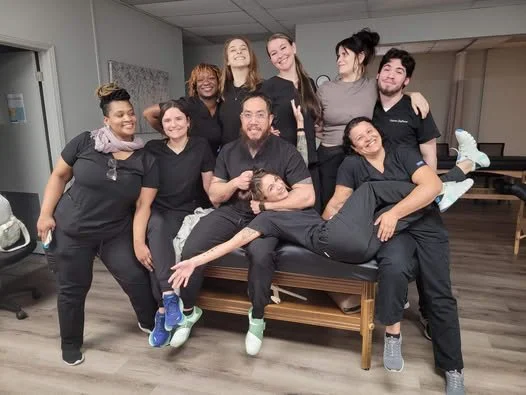
Licensed massage therapists seeking NCBTMB-approved ethics CE hours
Bodyworkers and somatic practitioners wanting trauma-informed skills
Healers and wellness professionals working directly with the body
CE credit is available through NCBTMB for massage therapists.
Other bodyworkers and healers are welcome to attend for educational enrichment.
Why Trauma-Informed Ethics Matter
Many ethical challenges in massage therapy don’t arise from misconduct — they arise from misunderstanding trauma responses, nervous system activation, and power dynamics within therapeutic relationships.
A trauma-informed approach supports you in:
Preventing re-traumatization
Navigating complex client responses with confidence
Holding clear, compassionate boundaries
Working sustainably without burnout
Ethical care is not just about what we do — it’s about how we show up.
“Samantha was not only inspiring, but impactful! She inspires a community of kindness that I look forward to building in my own practice for years to come”
Course Format & Details
One full 8-hour day, in person
Experiential learning, discussion, and real-world examples
Tables and printed handouts provided
1-hour lunch break (lunch not provided)
Certificate of completion issued
8 NCBTMB-approved Ethics CE hours
“Loved the practical and research based techniques!”

“This was a fascinating subject to learn about and has re-inspired my practice and ways I show up for my clients. ”
Meet Your Instructor
Samantha Moyer
MS, LMT, LMHC, NCC
I am a licensed massage therapist and licensed mental health counselor with a clinical focus on trauma and the nervous system. My work bridges bodywork and trauma processing, supporting clients in restoring a felt sense of safety as they navigate healing on the table.
As a practicing trauma therapist specializing in Lifespan Integration, and a somatic bodyworker and coach, I bring a deeply integrative perspective to this training — one that honors both the physiology of trauma and the relational field of touch.
I teach because massage therapists and bodyworkers deserve education that is practical, embodied, and grounded in how trauma actually shows up in the body — not just in theory. I truly felt called to teach this CE and I am excited to share it!